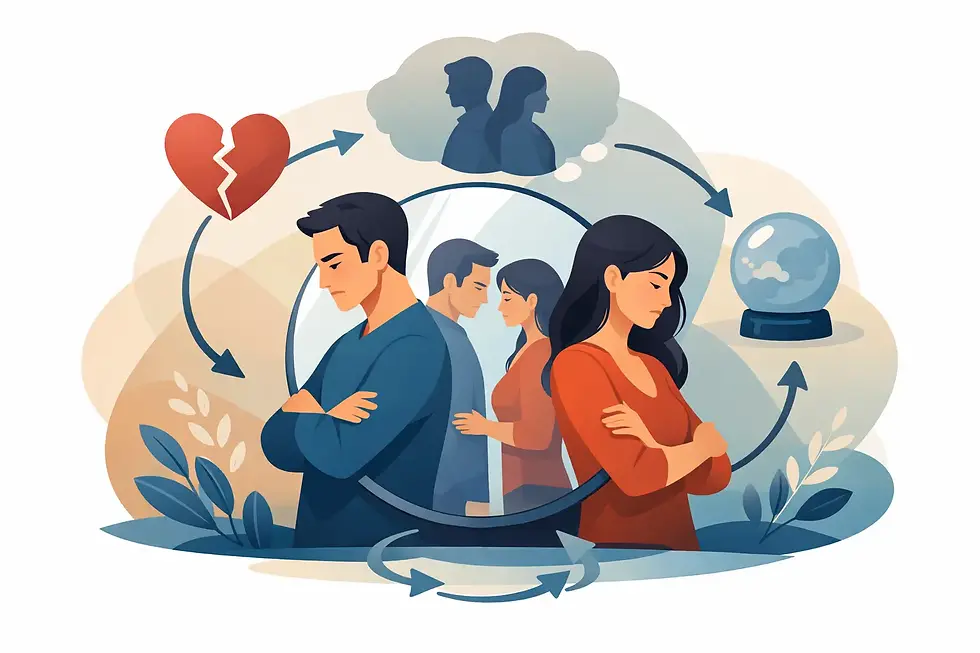
Anger: when does it help and when does it control you?
Anger is not in itself something “bad.” It is a normal emotion that occurs when you feel wronged, frustrated, threatened, or have your boundaries violated. The problem begins when anger comes out more intensely than the moment can handle, when it lasts longer than necessary, or when it ends up damaging your relationships with others, your work, and ultimately your self-image.
Many people don’t come to you for help saying, “I have an anger problem.” They usually describe arguments, outbursts, guilt, tension at home, difficulty calming down, or a feeling of “getting angry at the slightest thing.” Others never cry, but they hold in anger that becomes coldness, distance, sarcasm, or passive-aggressiveness . In both cases, the emotion is there—it’s just expressed differently.
What anger really is
Anger is a signal. It lets you know that something inside you is saying "this is it," "this isn't right," or "I can't take it anymore." So you don't need to fear it or mechanically suppress it. You need to understand it.
There is an important distinction here. Anger as an emotion is one thing, and aggressive behavior is another. You can be angry without becoming offensive. You can also appear calm, but inside you are seething. Therapeutic work is not about “not getting angry again.” It is about recognizing what triggers it, what maintains it, and how to manage it without it overwhelming you.
When does anger become a problem?
Anger starts to get in the way when your reaction is out of proportion to the event, when it happens often, or when it leaves a mark. You might see it in your relationship, where a small disagreement turns into a big fight. It might show up at work, when a comment immediately puts you on the defensive. Or it might turn on yourself, with harsh self-criticism and constant inner tension.
Often anger isn’t just about the “now.” It’s triggered by deeper beliefs like “I’m not respected,” “nobody counts on me,” “everything has to be done right,” or “if I don’t control the situation, I’ll get hurt.” When these thoughts operate automatically, the body reacts before you have a chance to think calmly.
The most common mechanisms behind anger
In practice, anger is often associated with four factors: frustration, a sense of injustice, low stress tolerance, and difficulty regulating the emotion. However, there are also cases where other emotions are hidden behind anger, such as fear, shame, rejection, or a wounded ego. In this case, anger acts like “armor.” It protects you momentarily, but it does not solve what really hurts.
This explains why some people feel empty or ashamed after an outburst. It's not that they're "bad characters." They've usually learned to react quickly, without processing, or grew up in an environment where anger was the only acceptable way to express discomfort.
How to deal with anger in everyday life
Effective management doesn't start at the moment of the explosion. It starts earlier, by recognizing the warning signs. Tightness in the body, rapid heartbeat, tension in the voice, absolute thoughts like "always" and "never", the need to respond immediately. If you learn to identify them in time, you have a much better chance of not getting carried away.
A practical approach is to pause briefly before reacting. Not to swallow what you’re feeling, but to gain a few seconds of thought. Then comes the crucial question: “What exactly bothered me?” Often it’s not just what was said, but the interpretation you gave at the time.
It also helps to change the way you express yourself. “You never respect me” usually escalates the conflict. “When that happened, I felt like you didn’t count on me” is more likely to be heard. It’s not a politeness technique. It’s a clearer way of communicating.
How CBT helps with anger
Cognitive-Behavioral Therapy works very effectively with anger, because it doesn't just stop at discussing the problem. It examines the situations that trigger it, the thoughts that precede it, the physical reactions and the behavior that follows. This is how the cycle that repeats itself is identified.
Then, the goal is twofold. On the one hand, to reduce the intensity and frequency of outbursts. On the other hand, to build more functional ways of defining, communicating, and managing frustration. This does not happen overnight. But it does happen with clear steps, observation, practice, and consistency.
In some cases, when anger strongly affects relationships or is recurrent without a clear underlying cause, a more structured psychological assessment can help to understand consistent patterns of personality and emotional functioning. This makes the therapeutic direction more targeted.
When is it worth seeking help for anger?
If you've started to fear your reactions, if others often tell you that you're "running away," if you feel guilty afterward, or if your anger ruins conversations that could be resolved otherwise, then it's worth taking a closer look. The same goes for if you don't explode, but you carry permanent tension, bitterness, and inner irritation that doesn't let you calm down.
Anger doesn't have to become your identity. It's an emotion that can be understood, regulated, and expressed more clearly. At PeopleForward, this work is done with structure, practical tools, and the goal of gaining more control without losing your voice.