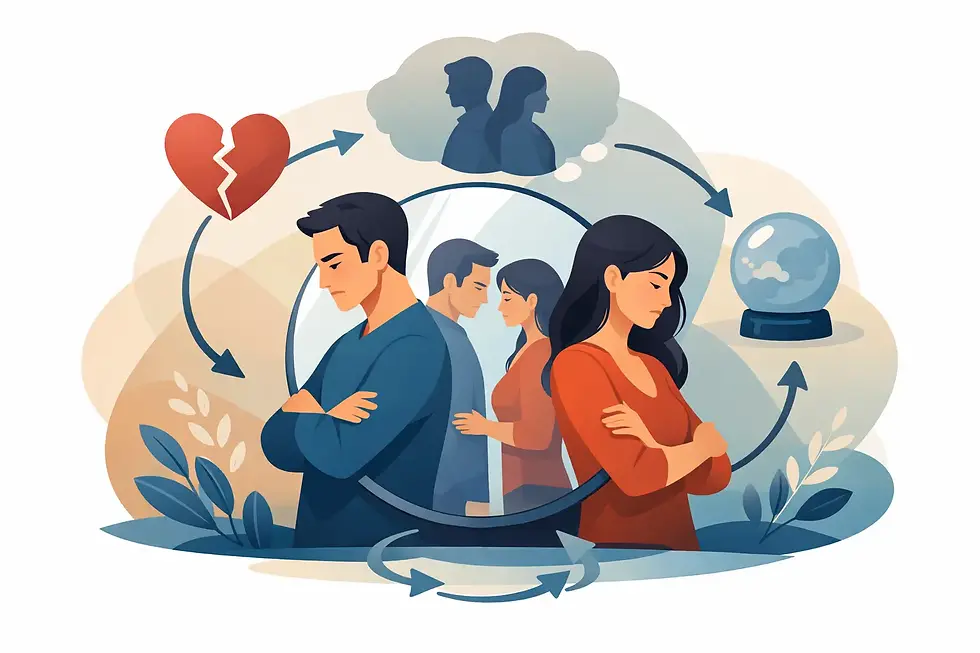
Anger: what it shows and how to manage it
Anger is a normal emotion. The problem is not that you get angry, but what happens afterwards: shouting, sudden reactions, regrets, breakups in relationships , or a constant inner tension that exhausts you. Many people have no difficulty understanding that they are getting angry. They have difficulty understanding what exactly is happening to them just before they explode.
What anger really is
Anger usually occurs when the brain reads a situation as a threat, injustice, rejection, disrespect, or violation of boundaries. It can be triggered quickly and intensely, before you have a chance to think clearly. This doesn't mean it's uncontrollable. It just means you need to learn to recognize its early signs.
In practice, anger is often not the only emotion present. Behind it may be shame, fear, disappointment, frustration, or a feeling of not being heard. When you only see the top of the reaction, you miss the part that really needs attention.
When does anger become a problem?
It doesn't have to be extreme outbursts to say that anger is affecting your life. It can become a problem when you hold tension throughout the day, when you respond aggressively to people close to you, when you have difficulty calming down, or when you feel like your reactions are greater than the event that caused them.
Also, anger becomes dysfunctional when it takes you away from what you really want. If you want to set boundaries but end up fighting, if you want to feel respected but then feel guilty, then the intention is not missing. The way is missing.
The signs before the outbreak
Most people think that anger comes on suddenly. But usually, there are warning signs. The body tenses, breathing becomes shallower, the tone of the voice changes, thoughts become absolute - "always," "never," "nobody." That's where the most useful point of intervention lies.
If you learn to recognize your pattern early, you are much more likely to avoid going on autopilot. This is a key part of a cognitive-behavioral approach : identifying the connection between thought, emotion, physical activation, and behavior.
How to manage anger in practice
First, you need to pause. Not to suppress what you're feeling, but to gain a few minutes of clear thinking. If you find yourself getting too worked up, temporarily step away from the conversation and say a simple, clear phrase like "I need 10 minutes to calm down and then we can continue." This small gesture can prevent a lot of damage.
Then, help your body to de-stress. Slow breathing, slowing down, walking a bit, splashing water on your face, or changing your surroundings can all work as buffers. They don't solve the problem by themselves, but they put you in a state where you can better manage it.
The next step is to control the thought that fuels the outburst. If the automatic interpretation is “he’s intentionally insulting me” or “he’s not counting on me at all,” the anger will rise much more quickly. Sometimes this interpretation is correct. Other times it’s hasty. The difference matters.
Finally, try to speak descriptively rather than aggressively. “When you talk like that, I feel pressured and I want to say it differently” is more effective than “you always do that.” The goal is not to become passive. It’s to consistently express what you need without ruining the conversation.
Why does the same anger repeat itself?
If you often get angry about the same things, it's usually not just a random irritation. There are deeper patterns. You may have a heightened sensitivity to criticism, a strong need for control, difficulty accepting disappointment, or past experiences that make you react strongly when you feel your worth is threatened.
This is where psychotherapy really helps. Not only to calm down in the moment of tension, but to understand why certain situations disproportionately burden you. When patterns are identified, change becomes more stable and less dependent on the will of the moment.
When is it worth asking for help?
If anger is affecting your relationship, family , work, or self-image, you don't need to wait for it to get worse. The same goes for if you feel like you're repressing everything and then lashing out, or if you've tried to control it on your own without consistent results.
In a structured therapeutic framework, you can learn to recognize triggers, work on thoughts that trigger tension, and build more functional ways of responding. At PeopleForward, this work is done with clear direction and practical steps that are transferred to everyday life.
Anger doesn't define you. It's a signal that something inside you is intensely activated and needs understanding, not just suppression. When you learn to read it correctly, you gain more control, better relationships, and more peace in your daily life.